How to Take Psilocybin Without Eating Mushrooms: Formats, Research and Safety
How to take psilocybin without eating mushrooms
Some people search for ways to take psilocybin without eating whole or dried mushrooms because they dislike the earthy taste, chewy texture or stomach discomfort associated with them. Others are interested in tea, capsules or edible products because these formats appear more convenient. The format can change the sensory experience, but it does not remove the psychological, medical or legal risks associated with psilocybin.
This guide explains the main alternatives discussed in psychedelic culture, including psilocybin tea, capsules, edibles and lemon preparations. It also separates established information from marketing claims. It does not provide a recipe, dose or purchasing instructions. Psilocybin can be unpredictable, products may be inaccurately labelled and the legal position in the UK is serious.
For related educational navigation, Exodelics has pages covering psilocybin mushrooms,
edibles,
LSD and
DMT. These links do not constitute medical advice, legal advice or a guarantee that any product is tested or suitable for human use.
Why do people look for alternatives to eating mushrooms?
Whole mushrooms can have a strong flavour and a rubbery or fibrous texture. Some people also experience nausea, stomach pain or vomiting. A preparation that masks the taste may feel more approachable, but an easier-to-consume product can also make it easier to underestimate the strength or take more than intended.
Nausea may have several causes. The mushroom material contains fungal fibre, and individual sensitivity, anxiety, the amount consumed, food intake and the psychological setting can all affect the experience. It is too simple to claim that one component, such as chitin, explains every case of stomach discomfort. Research into mushroom chemistry and digestion does not guarantee that tea, gummies or capsules will prevent nausea.
The FRANK guide to magic mushrooms notes that effects and strength can vary considerably. It also describes nausea, vomiting, dizziness, anxiety, paranoia and panic among possible effects. A different format may alter taste or timing, but psilocybin remains psychoactive.
What happens to psilocybin in the body?
Psilocybin is converted in the body into psilocin, the compound primarily responsible for psychedelic effects. After ingestion, the experience can include changes in perception, emotion, thought patterns and time awareness. Effects may feel positive, neutral or frightening depending on the substance, the person and the surroundings.
The onset is not perfectly predictable. Food, stomach contents, the form of the material, individual metabolism and the actual strength of a product can all affect timing. This matters because a person may feel little at first and assume that a preparation is weak, only for the effects to intensify later.
A preparation that is already extracted or finely broken down may feel faster to some people, but the evidence does not support treating every tea, capsule or edible as identical. Labels such as “fast acting”, “enhanced” or “high potency” should be treated as marketing claims unless supported by reliable testing.
Psilocybin tea
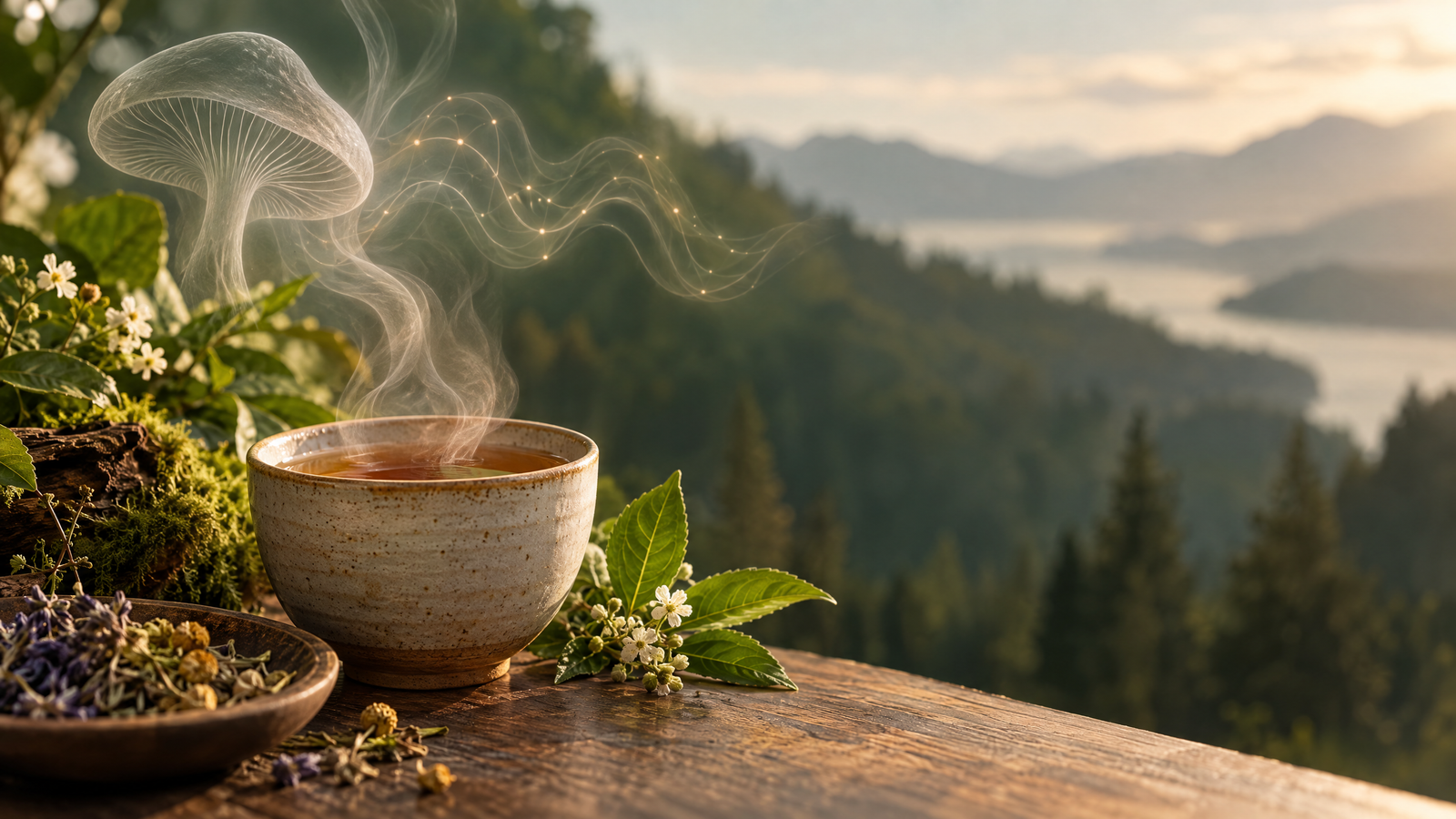
Tea is one of the most commonly discussed alternatives to eating whole mushrooms. The general idea is to transfer compounds into a drink so that the fibrous mushroom material is not consumed in the same way. People may also prefer tea because flavourings can mask the earthy taste.
Tea may change the sensory experience and could affect how quickly the body receives the active compounds. However, it is not automatically safer or more predictable. The final strength depends on the material used, extraction conditions, storage and whether the drink is consumed immediately. A homemade drink cannot be assumed to contain a measured or uniform amount.
Online discussions often focus on water temperature and whether heat damages psilocybin. Laboratory studies have examined the stability of psilocybin under particular conditions, including powdered mushroom material and solutions. Those experiments do not provide a simple household rule that guarantees potency or safety. The results depend on temperature, duration, acidity, concentration and the condition of the sample.
The practical takeaway is that heat-related claims should not be overstated. “Boiling destroys everything” and “heat makes no difference” are both too absolute. A laboratory observation is not the same as a validated preparation method, and preserving potency is not the same as making an experience safe.
Tea can also create an accidental-ingestion risk. A cup may look like an ordinary drink, and someone else could consume it without knowing what it contains. Never leave a psychoactive drink unattended or where it could be mistaken for a normal beverage.
Capsules and powdered formats
Capsules are another way to avoid the taste and texture of mushrooms. The material is placed inside a shell, which can make it easier to swallow. Capsules may appear more measured than loose mushrooms, but appearance alone does not establish consistency.
A capsule containing powdered mushroom material may vary in strength because active compounds are not always distributed evenly. Different parts of a mushroom can contain different concentrations, and two capsules made from an unverified source may not be equivalent. A label claiming a particular amount is not a substitute for independent analysis.
Capsules also delay the visual and sensory cues that tell a person what they have consumed. That can make accidental ingestion more likely, especially if they are stored near ordinary medicines or supplements. Keep psychoactive products clearly separated from household medication and food, and keep them away from children and animals.
The format is therefore best understood as a taste-avoidance option, not as proof of precise dosing or reduced risk. If someone is considering psilocybin because of depression, anxiety, trauma or another health concern, a capsule should not replace professional assessment.
Edibles, chocolates and gummies
Edibles can include chocolate, sweets, drinks and other foods. Their main appeal is usually flavour and convenience. Because they resemble familiar food, they may be easier to consume than dried mushrooms, but that same familiarity creates a safety concern.
An edible may contain mushroom material, an extract, synthetic psilocybin or an entirely different psychoactive compound. Products sold through unregulated channels may be mislabelled or contaminated. A colourful wrapper, a strain name or a stated quantity does not prove that the contents match the description.
There is also a timing issue. Edible effects can be delayed, and a person may take more before the first amount has fully taken effect. This can lead to an unexpectedly intense experience. Do not treat a sweet as an ordinary snack, and never leave one where a child, pet or unsuspecting adult could eat it.
Consumers should also be cautious with claims that gummies are “microdosed”, “balanced” or “therapeutic”. Clinical studies use screened participants, controlled materials, trained support and carefully documented procedures. A retail edible does not reproduce those conditions.
Lemon preparations and “lemon tek”
“Lemon tek” generally refers to combining mushroom material with citrus juice before consumption. Supporters suggest that acidity may begin chemical changes before the material reaches the stomach and may lead to a faster or more intense experience. Some people also say it reduces nausea.
The science behind these claims is less settled than online discussions often imply. Acidic conditions can affect chemical stability and conversion, but the result depends on concentration, time, temperature and the specific material. Evidence from a laboratory solution is not enough to establish a reliable household effect.
The most important safety concern is that a faster onset can also mean less time to recognise how strong the experience will become. A preparation described as “stronger” or “quicker” should not be approached casually. Faster effects can increase anxiety and make it more difficult to respond calmly if the experience becomes overwhelming.
There is no reliable evidence that citrus preparation removes the mental-health risks of psilocybin. It may change taste and timing, but it does not make an illegal or untested product medically safe.
Does changing the format reduce nausea?
It may reduce the unpleasant taste or the amount of fibrous material swallowed, and some people report less stomach discomfort when psilocybin is prepared as a drink. That does not mean nausea will disappear. Psilocybin itself can cause nausea, and anxiety, motion, food intake and the intensity of the experience may also contribute.
Nausea, vomiting, dizziness and stomach pain can be signs that a person is reacting badly. If symptoms are severe, persistent or accompanied by confusion, fainting, chest pain or breathing problems, seek urgent medical help. Do not assume that discomfort is simply part of the experience.
The safety of a preparation also depends on correct identification. Wild mushrooms can be confused with poisonous species, and processing them into tea or an edible does not remove a toxin. FRANK warns that poisonous mushrooms can cause severe illness or death. Never consume an unidentified wild mushroom.
Set and setting still matter
Changing the format does not remove the importance of mindset and surroundings. “Set” refers to a person’s mental and emotional state. “Setting” refers to the physical environment and the people present. Someone who is distressed, sleep-deprived, pressured or already experiencing unusual thoughts may be more vulnerable to panic or confusion.
A quiet, familiar environment and trusted support may reduce some situational risks, but they cannot guarantee a positive outcome. Avoid driving, cycling, swimming, climbing or using machinery. Do not make important decisions while intoxicated, and do not rely on a person who is also intoxicated to provide emergency support.
If someone becomes frightened, keep communication calm and simple. Move away from hazards, reduce unnecessary stimulation and encourage them to sit somewhere safe. If they become unconscious, have a seizure, experience breathing difficulties, develop chest pain or become dangerously agitated, call 999 and tell emergency staff exactly what was taken.
What research says about therapeutic psilocybin
There is growing research into psilocybin-assisted therapy for depression, addiction and anxiety associated with serious illness. These studies generally investigate psilocybin alongside preparation, supervision and psychological support. They do not establish that homemade tea, capsules or commercial gummies treat a condition.
The NCCIH overview of psilocybin research describes promising but limited findings. It also notes that experiences can be unpredictable and may involve increased heart rate or blood pressure, headache, nausea, anxiety, paranoia, hallucinations and persistent psychosis. People with psychotic conditions or severe forms of bipolar disorder should not use psilocybin.
Research interest is not the same as medical approval. A study finding a possible benefit under controlled conditions cannot be converted into a recommendation for self-treatment. Anyone experiencing depression, anxiety, trauma symptoms, addiction or suicidal thoughts should seek qualified support.
What about microdosing?
Microdosing refers to taking an amount intended to produce subtle effects rather than a full psychedelic experience. Online reports commonly describe better focus, creativity or mood. Controlled evidence is still developing.
A double-blind, placebo-controlled study published in 2022 examined low doses of dried Psilocybe cubensis in people who were planning to microdose. The active dose produced noticeable subjective effects, but the researchers found no broad evidence of improved wellbeing, creativity or cognitive performance. Some findings suggested small changes towards impaired performance, and the authors discussed the role of expectation. The study is available through PMC.
This does not prove that every person experiences no benefit. It does mean that claims about microdosing capsules or gummies should be qualified. A product marketed as a microdose may have an unknown amount of active material, and repeated use may carry risks that are not yet understood.
UK legal information
In the UK, GOV.UK lists magic mushrooms among Class A drugs. The maximum penalty for possession can be up to seven years in prison, an unlimited fine or both. Supply and production can carry up to life imprisonment, an unlimited fine or both. See the current GOV.UK drugs-penalties guidance.
The legal position is separate from the question of whether one format tastes better than another. Tea, capsules, chocolate and gummies are not automatically legal because they are food-like products. Laws may differ by country and can change, so readers should consult official local guidance.
How to evaluate claims about alternative formats
A reliable article should distinguish between a change in taste and a change in pharmacology. It should also say whether a claim comes from a controlled human study, laboratory chemistry, animal research, personal reports or marketing copy.
Ask whether the stated amount refers to psilocybin or to the weight of mushroom material. Check whether there is credible independent testing, a batch number and clear information about other ingredients. Be wary of claims that a product is guaranteed to be stronger, faster, safer or therapeutic.
For readers comparing psychedelic categories, Exodelics’ psilocybin information,
edibles page,
LSD information and
DMT information pages provide internal navigation. These links are not medical endorsements or legal assurances.
FAQs
What are the main alternatives to eating whole mushrooms?
People commonly discuss tea, capsules, powdered formats, chocolates, gummies and citrus preparations. Each format may change taste, texture or timing, but none removes the risks of psilocybin or guarantees accurate strength.
Is psilocybin tea safer than eating mushrooms?
Not automatically. Tea may reduce the amount of fibrous material consumed, but strength can be difficult to judge and the drink may produce delayed or unexpectedly intense effects. It also creates an accidental-ingestion risk.
Does lemon tek make psilocybin stronger?
It may change the timing or intensity for some people, but the evidence is not definitive. The exact outcome depends on the material and preparation conditions. Claims of a guaranteed stronger or faster effect should be treated cautiously.
Can capsules provide a precise amount?
Only a properly manufactured and independently tested product can provide meaningful consistency. Homemade capsules containing powdered mushroom material may vary in strength and should not be assumed to be precise.
Do edibles prevent nausea?
They may mask the taste and may reduce the amount of fibrous mushroom material consumed, but nausea can still occur. Psilocybin, anxiety and the intensity of the experience can all contribute to stomach discomfort.
Are magic mushroom gummies legal in the UK?
Magic mushrooms containing psilocybin or psilocin are controlled as Class A drugs in the UK. A gummy’s appearance or marketing description does not determine its legal status.
Can psilocybin be used to treat depression or anxiety?
Clinical research is investigating supervised psilocybin-assisted therapy, but this does not mean that homemade preparations or commercial edibles are established treatments. Speak with a qualified healthcare professional about symptoms and treatment options.
What should I do if someone reacts badly?
Call 999 for unconsciousness, seizures, breathing difficulties, chest pain, severe agitation or suspected poisoning. Tell emergency staff what was taken and when. Do not leave the person alone if it is safe for you to remain with them.
Conclusion
People look for ways to take psilocybin without eating mushrooms because of taste, texture, nausea and convenience. Tea, capsules, edibles and citrus preparations may change the experience of consuming mushroom material, but they do not make the substance predictable, legal or medically risk-free.
The strongest approach is to separate format claims from evidence claims. Laboratory observations about heat or acidity do not create a guaranteed recipe. Personal reports about lemon preparations do not prove a therapeutic effect. Research into supervised psilocybin therapy does not validate every commercial gummy or capsule.
Anyone considering psilocybin should understand the possible psychological and physical risks, avoid mixing substances, protect children and pets from accidental ingestion, and seek professional help for health concerns. This article is for general education only and does not provide dosing, preparation or purchasing instructions.